
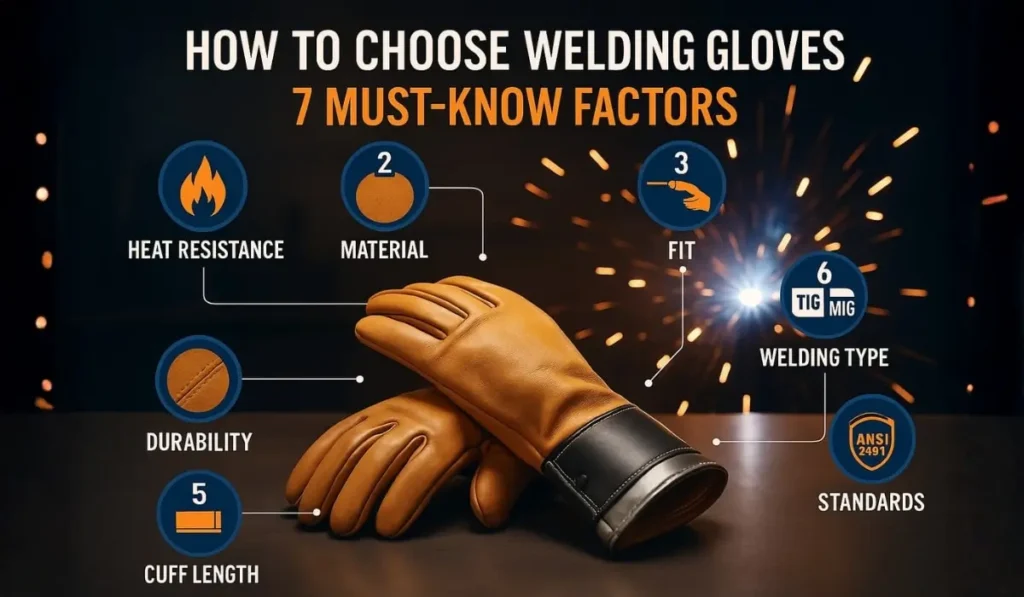
Whether you’re a seasoned welder or just getting started with hobby projects, choosing the right welding gloves is crucial. Not only do they protect you from burns, but they also enhance your performance. With the welding gloves market projected to reach $9.45 billion by 2025, growing at a 5.2% CAGR, there’s a lot of interest in ensuring safety and effectiveness. Let’s delve into the essential factors to consider when selecting your next pair of welding gloves.
1. Material and Heat Resistance
Your gloves’ material is the first line of defense against heat and sparks. Leather is a popular choice due to its durability and heat resistance. However, for those needing something a notch higher, Kevlar gloves offer superior protection and are a smart choice for more intense welding tasks. Always look for gloves with at least an ANSI Level 3 heat resistance rating.
2. Fit and Dexterity
Imagine trying to weld with gloves that feel like oven mitts. Not ideal, right? The fit of your gloves affects your ability to work precisely. A snug fit ensures dexterity, which is especially important for tasks requiring precision, like TIG welding. Check out our TIG welding gloves for options that balance protection with flexibility.
3. Cuff Length
The length of your gloves’ cuffs matters more than you might think. Longer cuffs provide added protection against sparks and heat, especially vital for overhead welding. Consider long cuff options that shield not just your hands but also your forearms.
4. Welding Type
Different welding types demand different glove characteristics:
TIG Welding: Requires thinner gloves for better dexterity.
MIG Welding: Thicker gloves are preferable due to higher heat exposure.
Stick Welding: Opt for even more robust gloves as this method generates significant heat.
Understanding your welding type can greatly influence your glove choice. For heavier tasks, explore our heavy welding gloves.
5. Durability
Welding gloves are an investment in safety. Look for gloves that can withstand the wear and tear of your specific tasks. Kevlar stitching, for instance, can enhance durability significantly, ensuring your gloves last longer without compromising on safety.
6. Grip
A good grip is essential to maintain control of your tools. Look for gloves with reinforced palms or grip-enhancing coatings. This feature not only makes your work easier but also safer, reducing the risk of accidents.
7. Breathability
Welding can be hot work, and sweaty hands are not just uncomfortable—they’re dangerous. Opt for gloves with breathable materials or moisture-wicking linings to keep your hands dry and comfortable.
Final Thoughts
Selecting the right welding gloves involves balancing protection, comfort, and functionality. With 24,000 monthly searches for welding gloves, it’s clear that many are seeking the right fit for their needs. To explore a range of options tailored to different welding types, visit our best welding gloves.
Need more personalized advice? Reach out to us via WhatsApp at +447360507325 or connect with us on Facebook and Instagram. Your hands deserve the best protection—let us help you find it.